How Does Generative Engine Optimization (GEO) Elevate Online Reputation Management (ORM) in 2026?
Instead, they synthesize real-time data from across the web into a direct, conversational narrative about your business.
GEO for reputation management ensures that when an AI answer engine evaluates your enterprise, it ingests verified, high-trust entity data and positive sentiment signals. If your digital footprint contains unaddressed negative press, unresolved customer complaints, or unstructured review data, AI models will synthesize those issues directly into their generated summaries.
Modern ORM uses generative engine optimization frameworks to build a resilient entity barrier that shapes how generative engines perceive and summarize your brand.
How AI Answer Engines Process Brand Perception
When a prospective client prompts an AI assistant with queries like “Is [Company Name] trustworthy?” or “What do customers say about working with [Company Name]?”, the AI model performs an immediate Retrieval-Augmented Generation (RAG) lookup across public databases.
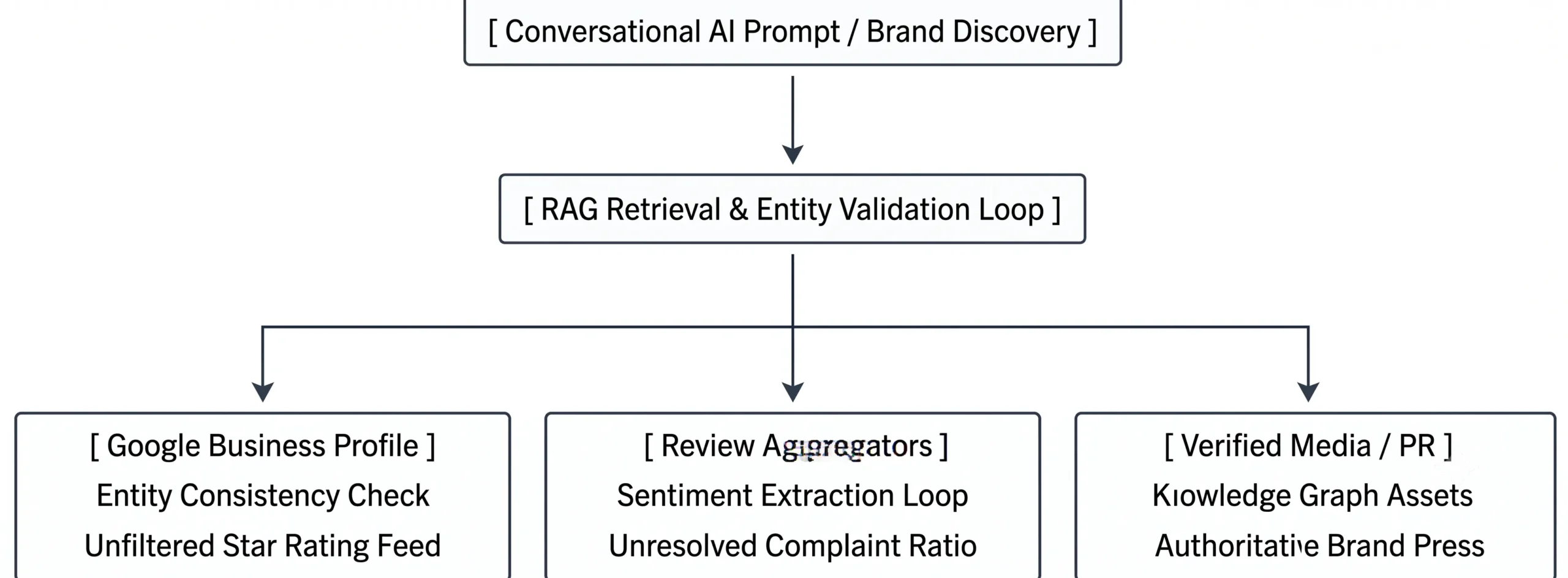
Rather than pulling a single web page, the AI assistant evaluates multiple data sources simultaneously:
- Unfiltered Review Sentiment: Natural language processing (NLP) models read the actual text inside client reviews on platforms like Google, Yelp, and industry-specific boards to measure overall customer satisfaction.
- Entity Consistency Signals: The engine cross-references your corporate Name, Address, and Phone (NAP) data across business registers to confirm entity legitimacy.
- Structured Authority Nodes: The AI scans for schema-marked press releases, official corporate blogs, and executive profiles to determine the primary brand narrative.
If the AI engine detects fragmented entity data or a high concentration of uncountered negative feedback, it synthesizes a cautious or unfavorable summary. Deploying targeted expert local search engine optimization and entity verification strategies ensures your brand remains protected across both traditional search results and generative AI answer interfaces.
Why is traditional reputation management failing in the age of AI search?
Traditional ORM strategies, which relied on burying a single bad URL under ten basic blog posts, are failing because modern generative AI models do not evaluate search engine results pages (SERPs) line-by-line. AI answer engines synthesize data from hundreds of sources simultaneously to construct a comprehensive sentiment profile of your brand.
If a negative news article, an unresolved Reddit thread, or a low star-rating average exists within the AI’s retrieval window, the model will extract that negative sentiment and present it directly to the user in a bulleted summary. Protecting your brand image now requires an active, multi-channel entity defense that establishes verifiable authority across the entire web.
The Dynamics of AI Sentiment Synthesis
To understand why outdated suppression tactics no longer work, consider how traditional search engines and AI models handle brand queries:
| Performance Area | Traditional Search Engine Processing | Generative AI Answer Processing (GEO) |
| Data Presentation | Displays 10 distinct, blue web links per page. | Synthesizes a single, conversational text summary. |
| Negative Content Impact | Pushing a link to Page 2 reduces user visibility by 90%. | The AI reads Page 2 data and includes it in the summary. |
| Review Analysis | Displays an average numerical star rating (e.g., 4.2 Stars). | Analyzes natural language sentiment inside review text. |
| Brand Protection Target | Dominating top-10 ranking URLs for brand name keywords. | Dominating vector database embeddings and Knowledge Graphs. |
The Danger of “Silent” Brand Erosion
In a traditional search model, a user might notice a negative link on the lower half of a page, click through to your website, and still convert if your site looks professional. In a generative search environment, if an AI assistant outputs a summary stating, “While [Company Name] offers competitive services, multiple users report billing discrepancies and slow customer support,” the prospect bounces immediately.
Because the AI’s summary carries an implicit tone of objectivity, consumers trust these generated evaluations. Building a proactive, multi-layered digital strategy managed through conversion-first website design and brand architecture is mandatory to prevent silent conversion loss.
How does proactive review generation feed AI sentiment models?
Modern online reputation management is no longer just about collecting star ratings for human shoppers to browse; it serves as the primary training data that AI sentiment engines use to evaluate your operational quality. Modern Large Language Models use natural language processing (NLP) algorithms to extract specific nouns, verbs, and emotional indicators from customer feedback.
Additionally, a steady influx of detailed, positive customer reviews provides machine-learning models with direct semantic proof that your business is active, reliable, and highly recommended.
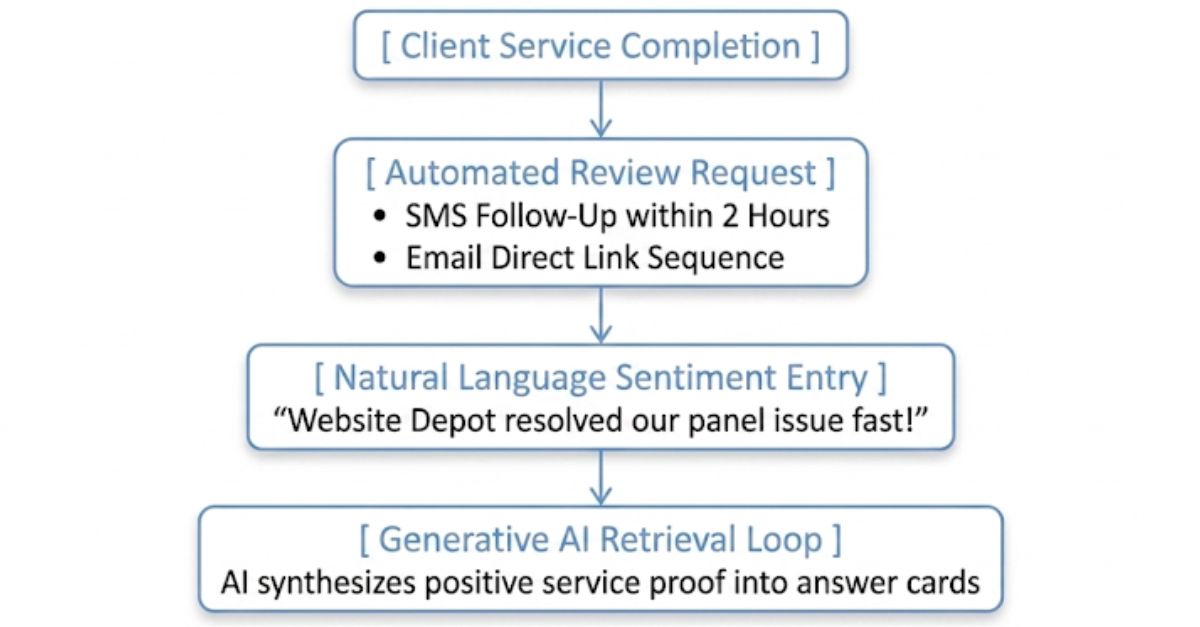
AI synthesizes positive service proof into answer cards
Structuring Review Collection for Maximum GEO Impact
To maximize the impact of user reviews on AI answer engines, review generation programs must encourage natural, descriptive language from satisfied clients:
- Prompting Specific Service Details: Automated SMS and email follow-up flows should ask clients to mention the specific service they received and the city location (e.g., “Our emergency AC repair in Glendale was fast and professional”).
- Maintaining Review Velocity: Generative engines assign higher weight to recent content. A continuous stream of 5 reviews per week carries significantly more weight in AI sentiment models than 50 reviews gathered two years ago.
- Managing Multi-Platform Review Profiles: AI engines do not rely exclusively on Google reviews. They cross-reference sentiment across Yelp, Trustpilot, Better Business Bureau (BBB), and industry-specific portals (such as Avvo for legal or Healthgrades for healthcare) to build a unified sentiment score.
Professional Handling of Negative Sentiment
When a negative review occurs, your public response is parsed by AI engines as a signal of corporate accountability. Responding professionally within 24 hours, acknowledging the client’s concern, and providing an offline resolution path signals to both human readers and AI crawlers that your business maintains high customer service standards.
How does positive content suppression outrank negative brand assets in AI vector spaces?
Negative content suppression in a GEO framework requires populating search engine vector spaces with high-authority, fully optimized brand assets that AI models prioritize during retrieval loops. Rather than creating generic, thin content, an effective suppression strategy builds verified digital entities that demonstrate domain expertise and brand transparency.
By publishing structured press releases, authoritative case studies, executive thought leadership profiles, and verified directory listings, you create an overwhelming barrier of positive, high-trust data nodes that AI models cite when generating brand summaries.
The Multi-Channel Brand Suppression Matrix
To control what AI answer engines display about your business, your content distribution strategy must establish primary authority across four core digital channels:
1.Optimize Official Corporate Domain Assets: Foundation Layer.
Ensure your primary website features comprehensive “About Us,” “Executive Leadership,” “Corporate History,” and “Terms of Service” pages embedded with rich Organization JSON-LD schema markup.
2.Claim and Verify Tier-1 Entity Profiles: Social & Directory Nodes.
Fully optimize brand profiles on high-authority platforms, including LinkedIn, Crunchbase, Google Business Profile, YouTube, and major regional chambers of commerce.
3.Publish Verified Case Studies and Whitepapers: Owned Thought Leadership.
Release detailed, data-backed case studies and technical articles that highlight your problem-solving capabilities, customer success metrics, and field expertise.
4.Distribute Syndicated Press Releases and Industry News: Earned Authority Distribution.
Broadcast verified corporate milestones, community involvement programs, and executive awards through authoritative PR wire services to populate third-party news indexes.
The Role of Schema Markup in Content Suppression
Structured schema markup acts as an explicit translation layer that tells AI crawlers exactly how to interpret your digital assets. Implementing Organization, ProfilePage, and Article schema across your positive content assets explicitly defines your official brand channels, executive team, and corporate achievements.
When an AI engine processes a query about your business, the schema code explicitly directs the crawler to your verified positive assets, ensuring that unauthorized or negative third-party posts are excluded from primary AI answer summaries. Managing these technical deployments through specialized data-driven search engine optimization frameworks ensures your positive brand narrative dominates across every search interface.
What backend technical parameters and JSON-LD schema networks protect brand identity?
Technical ORM requires configuring your web architecture so that AI crawlers and search spiders can instantly verify your brand’s official assets. Generative AI engines rely on explicit digital data connections to construct a business’s Knowledge Graph node.
If your website lacks structured schema markup, displays inconsistent business metadata, or suffers from slow backend performance, AI engines will rely on unverified third-party sources to answer queries about your firm. Implementing clean backend technical parameters and linked JSON-LD schema networks ensures that search engines look directly to your official web properties as the authoritative source of truth for your brand.
Constructing the sameAs Schema Network
The sameAs schema attribute is one of the most powerful technical ORM tools available. It explicitly informs search algorithms and Large Language Models that specific social media profiles, directory listings, and press releases belong to the exact same corporate entity as your main website.
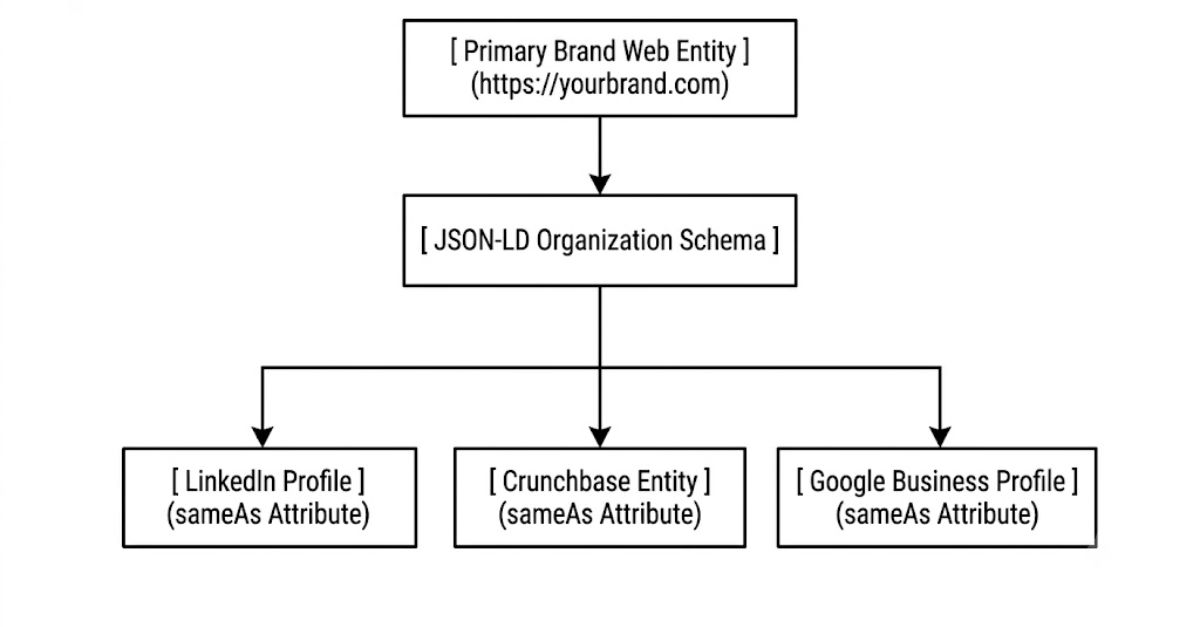
Essential Schema Schematics for Brand Protection:
- Schema: Declares your official legal business name, brand logo, physical corporate headquarters, official contact points, and verified social media profiles directly to search engines.
- Person Schema for Founders and Executives: Connects key brand leaders to their professional credentials, published articles, and official speaking engagements, building executive authority and suppressing personal negative search results.
- Brand Schema: Defines proprietary products, registered trademarks, and official service offerings, preventing competitors or third-party review aggregators from hijacking your core product terms.
- PressRelease Schema: Tags corporate news releases with explicit publishing dates, author credentials, and entity references, ensuring AI news feeds cite official corporate announcements.
Maintaining Technical Site Performance and Core Web Vitals
If a user or AI crawler encounters technical errors, broken link redirects, or slow server response times when visiting your official web pages, the algorithm assigns a lower reliability score to your site. Ensuring your backend architecture passes all Core Web Vitals parameters, specifically maintaining Largest Contentful Paint (LCP) times under 2.5 seconds, guarantees that AI crawlers can efficiently index your official positive assets.
Which high-vulnerability industries require continuous GEO reputation monitoring?
While every enterprise benefits from proactive brand management, high-ticket, trust-intensive industries operate under extreme reputation vulnerability. For industries where each transaction carries significant value, even minor AI-generated negative sentiment can reduce client acquisition.
High-Vulnerability Industry Analysis
| Industry Vertical | Primary Reputation Vulnerability | Impact of Negative AI Summaries | Recommended GEO/ORM Strategy |
| Legal Practices | Unfavorable case outcome posts, ethics complaints, or low bar reviews. | High-value injury or defense clients choose competing firms immediately. | Deep practice-area content siloes, client review sentiment campaigns, and bar verification schema. |
| Healthcare & Medical | Patient wait-time complaints, bed-side manner reviews, or mal-practice claims. | Prospective patients seek alternative specialists or clinics. | Doctor-specific Person schema, HIPAA-compliant review collection, and verified medical publications. |
| E-Commerce Brands | Shipping delay complaints, product quality critiques, or return policy rants. | Conversion rates drop sharply across shopping ads and AI recommendation cards. | Product review schema integration, Merchant Center feed compliance, and proactive customer service messaging. |
| Real Estate & Finance | Deal execution critiques, fee transparency complaints, or market loss posts. | High-net-worth investors and buyers refuse consultations. | Executive thought leadership, verified transaction case studies, and corporate press distribution. |
| Home Improvement | Project timeline delays, pricing disputes, or subcontractor performance issues. | Homeowners reject high-ticket renovation proposals during research. | Geotagged project photo feeds, verified license schema, and automated post-job review sequences. |
Continuous AI Brand Monitoring and Crisis Protocol
Proactive reputation management requires monitoring what conversational AI engines say about your brand in real time. Running automated weekly prompt audits across tools like ChatGPT, Gemini, and Perplexity allows your marketing team to detect emerging sentiment shifts early.
If an AI engine begins outputting inaccurate or defamatory information about your business, a multi-stage response protocol must be executed:
- First, Source Tracking: Identify the specific third-party URLs or unverified review platforms from which the AI model extracted the negative information.
- Afterward, Direct Resolution & Removal: Contact platform administrators to correct inaccurate information, address legitimate customer concerns, or submit formal removal requests for policy-violating content.
- Finally, Counter-Asset Publishing: Publish fresh, authoritative, schema-marked content that directly addresses the topic, providing AI engines with updated, accurate data to overwrite the old sentiment embeddings.