Google Updates Shopping: Impact on Marketing Packages & and More
Google’s Shopping ecosystem is entering a new phase as the platform rolls out meaningful changes ahead of 2026. These updates affect how promotions appear, how products are structured, and how omnichannel retailers stay compliant. For brands relying on performance-driven growth, this shift directly influences how marketing packages are built, managed, and measured.
As an omnichannel digital marketing agency, our service adapts these updates into actionable strategies that protect visibility while unlocking new revenue opportunities.
The recent expansion of Google Shopping promotion rules introduces more flexibility for merchants, but it also adds layers of technical detail that cannot be ignored. From subscription-based offers to revised abbreviation policies and looming Product ID requirements, the landscape is changing quickly.
Google Shopping’s Shift Toward Subscription Commerce
Subscription-based selling has moved from optional to mainstream, and Google is now reflecting that reality within Shopping ads.
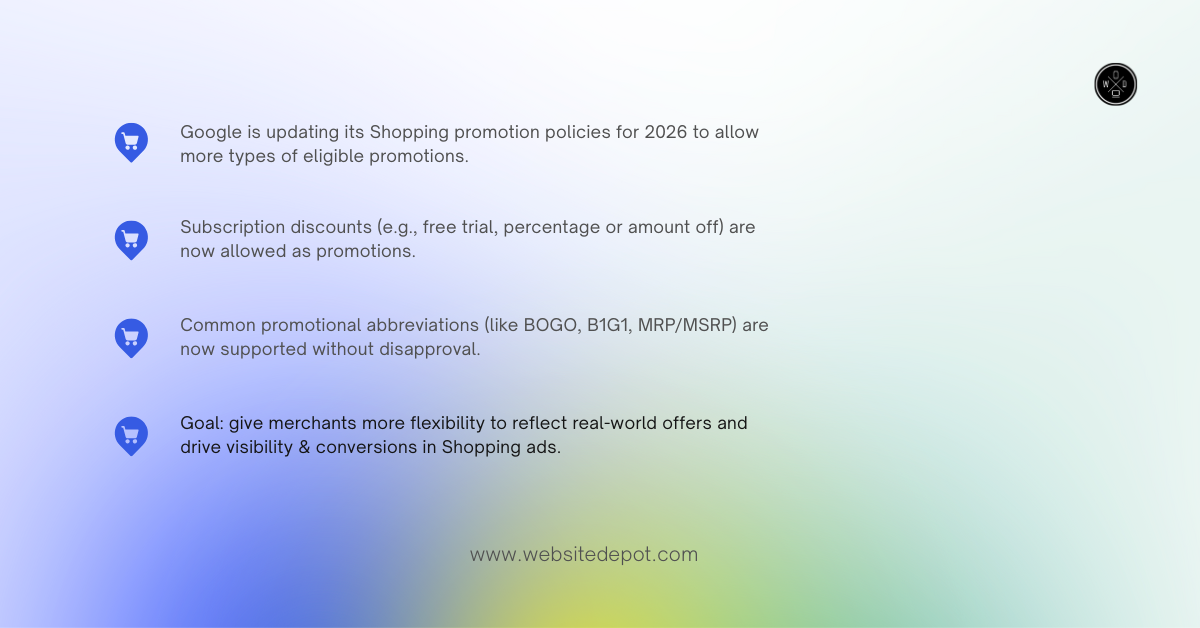
According to Search Engine Land, as of January 12, 2026, merchants can promote subscription incentives directly in Shopping results, giving recurring revenue brands a stronger competitive edge.
This change allows eligible merchants to display offers such as “First month free” or deeply discounted initial billing within Shopping ads. These promotions are no longer limited to landing pages or fine print.
Elements of the update include:
- Support for subscription-based promotions within Shopping ads
- Visibility for introductory pricing tied to recurring billing
- Expanded redemption rules inside Google Merchant Center
- Greater parity between Shopping ads and subscription landing pages
Our marketing packages incorporate this update by handling the technical configuration required to activate subscription promotions properly.
This includes, (if part of the customized packages for our clients), setting up subscribe_and_save redemption restrictions in Google Merchant Center, validating eligibility, and ensuring compliance with Google’s promotional policies.
Without this setup, subscription offers may fail to appear or risk disapproval. We manage the backend complexity so your subscription strategy performs as intended across paid Shopping placements.
Integrating Subscription Promotions Into E-Commerce Campaigns
Subscription promotions are powerful only when they align with the broader e-commerce strategy. Our approach connects these new Shopping capabilities with existing campaign structures so that introductory offers support long-term customer value rather than short-term clicks.
Within our service, this integration includes:
- Structuring Shopping feeds to reflect subscription eligibility
- Aligning promotional messaging with landing page terms
- Monitoring policy compliance across recurring billing offers
- Optimizing introductory incentives for qualified traffic
These steps are built directly into our marketing packages, ensuring subscription-based brands can scale without operational bottlenecks. While subscription commerce often overlaps with social media marketing, we keep each channel aligned without overlapping execution or conflicting messaging.
Abbreviation Approval Brings Flexibility Back to Ad Copy
For years, shorthand promotional language triggered unnecessary disapprovals in Google ads. Merchants frequently saw ads rejected for using common abbreviations that customers already recognized. That restriction has officially changed.
Google now supports widely used abbreviations such as:
- BOGO
- B1G1
- MRP
- MSRP
This update reduces friction across Shopping and paid campaigns, allowing ads to communicate value more efficiently within limited character counts.
Our marketing packages adapt immediately by auditing existing ad copy and promotional text. We identify areas where expanded abbreviations can improve clarity, conserve space, and increase click-through rates without triggering policy issues.

digital marketing packages
How Abbreviation Support Improves Performance Metrics
Shorter promotional language creates room for stronger calls to action, clearer pricing, and more compelling incentives. When used strategically, abbreviations improve readability and engagement.
Our service includes:
- Reviewing legacy ad copy for outdated language constraints
- Rewriting promotions using approved shorthand
- Testing revised messaging for performance lift
- Maintaining compliance across Shopping and paid search
This approach ensures ads remain eligible while benefiting from Google’s updated flexibility. These refinements are a core part of our marketing packages, especially for brands managing large product catalogs or frequent promotions.
While this change impacts paid campaigns broadly, we coordinate it carefully with Google Ads execution so promotional messaging stays consistent across formats without duplicating effort.
The March 2026 Product ID Requirement
One of the most significant updates comes with a firm deadline. By March 2026, Google requires separate Product IDs for items that differ between online and in-store versions. Variations in price, availability, or fulfillment now demand distinct identifiers.
For omnichannel retailers, this change introduces real risk. Google has warned that noncompliance can result in silent disapprovals, where products simply stop serving without obvious alerts.
The requirement affects:
- Retailers with online-only pricing
- Brands offering in-store exclusives
- Merchants using unified SKUs across channels
- Businesses running local inventory ads
Our marketing packages act as a safety net by identifying Product ID conflicts before they disrupt visibility. We audit feeds, map discrepancies, and restructure product data to align with Google’s updated standards.
Preventing Silent Disapprovals Before They Happen
Silent disapprovals are particularly damaging because they often go unnoticed until revenue declines. Our service focuses on proactive feed management to eliminate that risk.
Our process includes:
- Auditing existing Product IDs across channels
- Identifying mismatches in pricing or availability
- Creating compliant ID structures for omnichannel listings
- Validating changes inside Google Merchant Center
This work supports both paid Shopping and local SEO initiatives without overlapping execution. Each channel benefits from clean, compliant data that aligns with Google’s evolving expectations.
Why These Updates Redefine Modern Marketing Packages
Taken together, these changes signal a broader shift in how Google evaluates merchant quality, accuracy, and promotional clarity. Subscription visibility, flexible language, and precise product data are no longer optional enhancements.
Our packages are designed to absorb these updates without disrupting performance. Rather than reacting after issues arise, we build compliance and optimization directly into campaign management.
This proactive structure benefits:
- E-commerce brands scaling recurring revenue
- Omnichannel retailers managing complex inventories
- Businesses running frequent promotional cycles
- Companies prioritizing long-term ad stability
By embedding these updates into our service framework, we help brands maintain momentum while competitors scramble to adjust.

Aligning Shopping Updates With Broader Digital Strategy
Google Shopping does not operate in isolation. Feed quality, promotional accuracy, and compliance affect how campaigns perform across search, Shopping, and discovery placements.
Our approach ensures these Shopping updates align with:
- Paid search strategies
- On-site conversion optimization
- Product-level reporting and insights
- Long-term account stability
For brands in competitive verticals, including SEO home improvement markets, this alignment prevents wasted spend and inconsistent messaging. Each adjustment made for Shopping strengthens the broader digital ecosystem rather than creating fragmentation.
How We Build Resilient Campaigns
The pace of Google updates continues to accelerate. Our service focuses on building flexible systems that adapt without requiring constant reinvention.
Within our marketing packages, that means:
- Continuous policy monitoring
- Regular feed audits and optimizations
- Structured promotional testing
- Clear documentation of campaign changes
This framework allows us to implement updates like subscription promotions, abbreviation approvals, and Product ID rules quickly and accurately.
What These Changes Mean for 2026 and Beyond
As Google refines Shopping ahead of 2026, brands that treat compliance as a growth lever will outperform those that see it as a burden. Each update rewards accuracy, clarity, and technical precision.
Our marketing packages translate these requirements into competitive advantages. Instead of reacting to disapprovals or declining impressions, our clients move forward with confidence, knowing their campaigns are built to meet Google’s next standards.
From subscription visibility to feed-level compliance, these updates reshape how performance marketing operates. Our service ensures those changes work for you, not against you, as the platform continues to evolve.